When: spend up to 1 hr in total, across 3-5 weeks, keeping an audio diary; between 1st of February ’25 and 2nd June ’25.
When: for 3-5 weeks, between 1st of February ’25 and 2nd June ’25.
We are looking for social workers and ex-social workers with experience of working in coastal communities to participate in an important research study. Your insight and expertise can make a real impact on understanding the unique workforce challenges faced in these communities.
If you have experience of practicing social work in coastal communities, either currently or previously, we want to hear from you. Participate in an interview and contribute to meaningful research that will shape future support strategies. For doing so you will be compensated with a £25 Amazon (or other store of your choice) voucher.
If you are interested or would like more information, please contact coastalsocialwork@bucks.ac.uk
This research is a collaboration between Buckinghamshire New University, The Open University, Bath Spa University and Edge Hill University. It is funded by the National Institute for Health and Social Care Research.
When: 1st June 2025 to 30th June 2026.
Recovery Histories and Caring Communities are two separate academic projects researching the histories of child welfare, protection and safeguarding. They have each been granted full ethical approval by Birkbeck, University of London, and Newcastle University, respectively.
The Recovery Histories project is investigating changing understandings of child sexual abuse, harm, trauma and recovery from the 1950s to the present day.
Caring Communities: Rethinking Children’s Social Care, 1800-present is examining the labour, experiences and impact of children’s social care between across the last two centuries.
As frontline practitioners’ insights are rarely recorded, we are working together to reach current and former practitioners who might want to contribute to historical records by recording their personal oral history.
There is also much to be learned from the professional and personal experiences of child protection practitioners as practice has changed. By participating, you can help build a historical archive and shape current services to better meet the needs of children, carers, and practitioners.
Starting with an informal in-person meeting or phone call, to discuss the process, your oral history would then be co-produced between you and one of our team of oral historians. The history would take a ‘life-story’ approach, from which we will then draw out specific themes.
More information about both research projects and the research teams can be found here.
Many thanks,
Ruth Beecher and Claudia Soares
History and Practice - Special Interest Group
Our Special Interest Group
History matters and is essential to a critical understanding of our current challenges in policy and practice in the present. Our Special Interest Group, meets 3-4 times a year. From these meetings, we are developing a core group of participants, and we'd love you to join us.
Purpose
You can read about our Co-Chairs below, and details on our next event and recordings of past events can also be found towards the bottom of this page.

Dr Ruth Beecher
Dr Ruth Beecher’s current project focuses on the histories of abuse, trauma and recovery from survivor and practitioner perspectives (Ireland, England, Scotland and Wales 1950s to present).
Between 2018 and 2024, Ruth investigated the role of health professionals and feminist survivor activists in relation to early intervention in child sexual abuse in Britain, 1970-2000, using archival research and new oral histories. Her research and teaching interests include the history of British and American health and social care, with an emphasis on the history of children and families, the history of the professions and the history and politics of gender, sexuality and sexual violence.
Ruth is co-chair of the international Challenging Research Network, a group of researchers and academics who work in complex, emotionally demanding, and politically charged research territories.
Ruth is the founder and a trustee of the heritage charity Úna Gan a Gúna: Irish Women’s Oral History Collective. This is a feminist collective dedicated to ensuring that the memories, experiences, and lives of Irish and diaspora women are documented and preserved. Ireland’s history has traditionally focused on the lives of men, Úna seeks to make it richer and fuller by gathering, preserving and sharing women’s stories.
Prior to 2018, Ruth was a leader in local government, she programme managed local policy initiatives and translated national policy into successful practice on the ground, both in children’s services and working across into other sectors particularly housing, health and employment.
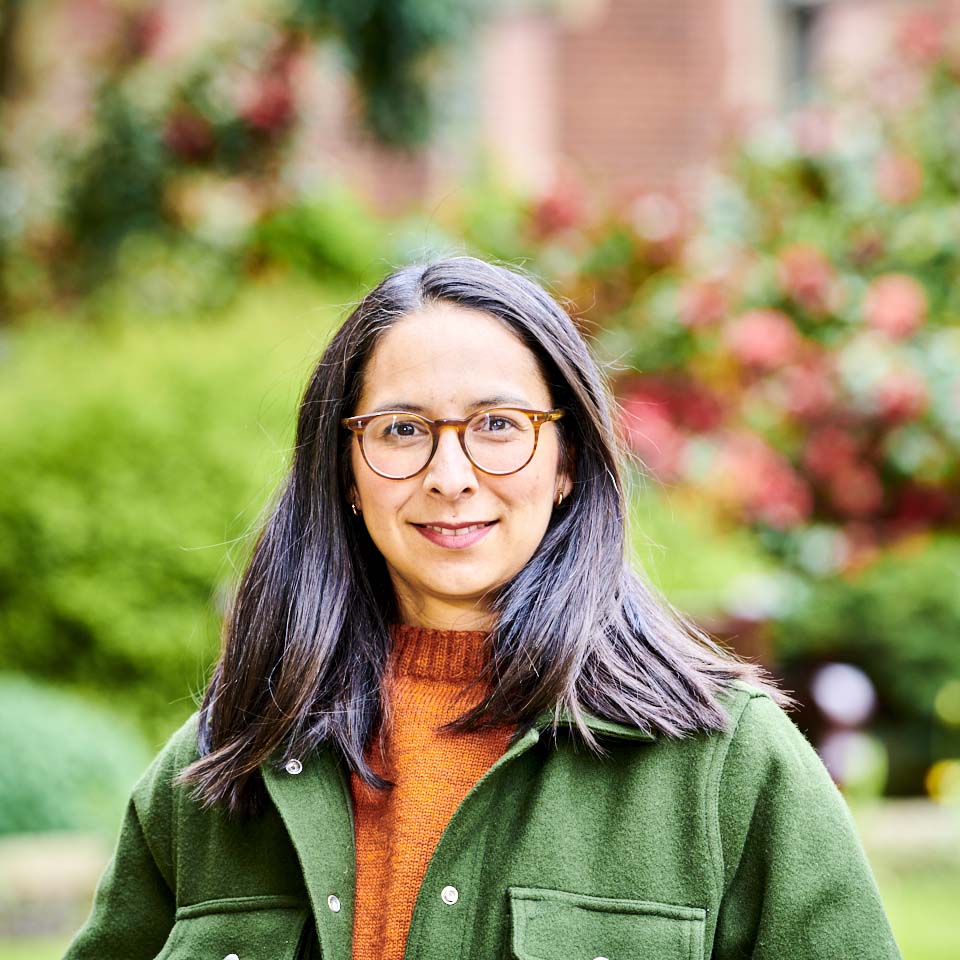
Dr Claudia Soares
Dr Claudia Soares is a Modern British and Imperial historian specialising in nineteenth and twentieth century histories of family and childhood, the emotions and material culture, poverty and welfare, health, disability, and wellbeing, and migration and environment.
She joined Newcastle holding both a British Academy Postdoctoral Fellowship and a NUAcT Fellowship.
Claudia’s British Academy funded project, 'In care and after care: emotions, institutions, and welfare in Britain, Australia, and Canada, 1820-1930', brings a history of emotions perspective to understand residential care experiences, to address the performance of emotion and affect in care provision, and individual and collective responses to institutional life. As a transnational project, that draws on 'new' imperial history approaches too, this research contributes to a growing body of scholarship that considers the two-way dialogues, circulation, and development of welfare practices on a global scale. I am currently preparing my second monograph from this research.
In June 2024, Claudia took up a UKRI Future Leaders Fellowship for a new project called 'Caring Communities: Rethinking Children's Social Care, 1800-present'. This project uses historical and contemporary sources in innovative ways to generate new understandings about the role, value, and meaning of children's care through time, and importantly offers new ideas about what children's care could look like in the future. The project develops an innovative, interdisciplinary framework that combines approaches from historical research with creative, arts based methods and participatory practices to provide a major cultural and affective history of children's care between 1800-present.
Claudia is a co-convenor of the Life Cycles Seminar that takes place at the Institute of Historical Research at Senate House, London, and the Bodies and Emotions Strands for the Social History Society.
Having previously worked in the third sector for a number of years, Claudia is particularly interested in the long history of the development of children's care and welfare provision more broadly, and present day social work and welfare practices experienced by a number of vulnerable and marginalised groups.
