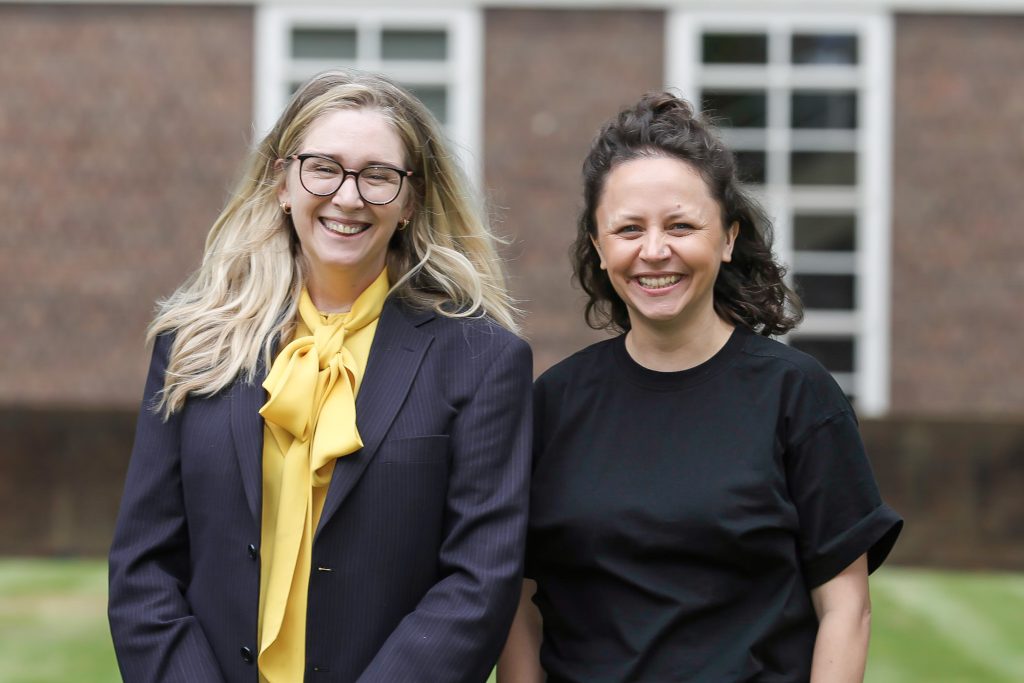
Why does history matter to current child protection and how can the past help us shape present and future practice? These were questions we posed during the first meeting of the new AOCPP Special Interest Group (SIG), History and Practice. Chaired by Dr Claudia Soares (Newcastle University) and Dr Ruth Beecher (Birkbeck University), and featuring a short talk from Dr Kate Wilson (Newcastle University), our first session began with a lively discussion of whether and why we – as historians, social workers and child protection professionals – should care about the past, and how historical insights can help us shape child protection in the present day.
Themes and insights
Drawing on the diverse expertise of AOCPP members in attendance – who came from backgrounds in areas such as social work, survivor participation and archiving – our opening discussion touched on some important themes about the value of history in modern day practice. Practitioners shared some of the ways in which an engagement with the past might helped them to think about their current work, such as understanding how and why legislation has changed and evolved, to understanding the growth and application of broader ideas such as bureaucratic surveillance and colonialism, and thinking through the impact of these shifts on everyday work and care. Importantly, one of our SIG members emphasised that understanding and capturing history can ‘help inform the next generation,’ pointing to the ways knowledge of historical practice can act as an important, usable past to guide where we go next.
Methods of researching child protection histories
Claudia and Ruth also shared outlines of their projects, which explore the long-term history of children’s social care from 1800-present day and the history of recovery from child sexual abuse (CSA) from 1950-present day, respectively. While these projects cover different, though interlinked, histories, they share a common aim: centring the voices of those direct experience of care and CSA, and co-producing research and outcomes.
A central facet of this approach in both Caring Communities and Recovery Histories is the use of oral history; both projects will be gathering and recording oral history testimonies about people’s experiences of care and CSA, including frontline child protection professionals as well as survivors and Care-Experienced people, to ensure that the long-term histories of child protection include the voices and perspectives of ‘ordinary’ people who were there. As Claudia noted regarding oral histories of child protection professionals, the perspectives of those providing the ordinary everyday labour of care and protection do not often appear in historical research and the complexity of safeguarding vulnerable children is not well understood beyond child welfare professionals. Oral history is a way of recovering new kinds of accounts, reframing the history of this kind of work.
Kate set out what the process of taking part in an oral history interview for either Caring Communities or Recovery Histories would look like, outlining how people who wish to take part will have the opportunity to shape the interview process in a background discussion beforehand, and how interviewees will have control over the transcript and audio and how the interview is eventually archived.
During the session, Ruth also played us an oral history clip from an interview she conducted with a retired health visitor children's nurse, giving us the opportunity to reflect on the unique insights this research method can bring to our understanding of child protection. We noted how the clip revealed the emotions and impact of child protection work, aspects which are often left out of case files or academic literature drawing on statistics. Oral history interviews can reemphasise the importance of these personal and emotional histories which are so often left out or marginalised in official accounts, making sure knowledge is valued equally.
What’s next?
Our next History and Practice SIG meeting is on Tuesday 3 December 2025, and we’re always looking for new faces to join the lively discussion.
As well as offering room for attendees to explore and state a shared commitment to recording the history for the benefit of practice in the present day, our SIG is also a space for deep reflection that is sometimes missing from daily working lives. If you’d like to find out more and share your ideas about how history shapes our present values and future practice, please join us! You can contact Claudia.soares@newcastle.ac.uk or r.beecher@bbk.ac.uk if you would like further information.

Recording your own oral history
Artists, politicians, writers and industrialists’ life stories are easily found but few child protection practitioner histories are preserved in archives. Contact us if you’d like to record an oral history of your life and career in child care, child welfare or child protection.
This blog was written by Dr Kate Wilson - kate.wilson@newcastle.ac.uk


 Previous Article