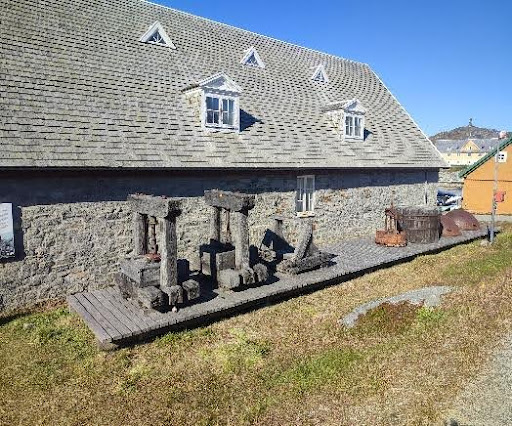
Day two was filled with deep learning and reflection on Greenland’s cultural history and present-day struggles. The exhibition at the Greenland National Museum, Communication Makes People, stood out as a profound exploration of Greenlandic identity. Through fascinating artifacts, it highlighted how social history, colonisation, and geopolitical shifts have influenced the birth of a national consciousness.
Our day began with a visit to Meeqqat Inuusuttullu Angerlarsimaffiat, an organisation dedicated to providing Out-of-Home care for Greenlandic children. Here, the manager, a passionate Liverpool football supporter, shared her vision for creating a service that meets the physical, emotional, spiritual, and cultural needs of children. The manager explained how children’s care plans go beyond education and health, incorporating skills essential to Greenlandic life, like hunting and outdoor expeditions. This connection to nature is seen as key to healing and growth, especially for children who’ve faced significant adversity, including poverty, violence, and even the loss of loved ones to suicide.
Throughout the visit, the manager’s passion for improving services was evident. She talked about the urgent need for more children's homes, better training and recruitment of staff, and stronger policies to prevent children from drifting aimlessly through the care system.
After lunch with inspiring social work academics at the University of Greenland, we met the team at MIO, a National Advocacy Centre championing children’s rights. Their primary focus? Addressing Greenland's suicide crisis. The team shared how systemic issues like climate change, poverty, domestic violence, and substance abuse are driving mental health challenges across all age groups. Despite their best efforts, limited resources make tackling these complex issues a huge challenge.
Other pressing concerns that MIO is addressing is the lack of early intervention services—programs that could offer support before people reach crisis. Structural inequalities and a scarcity of opportunities are pushing many families into cycles of unemployment, abuse, and despair. In response, MIO is working tirelessly to raise awareness of these social determinants of health inequality, but their primary strategy remains focused on suicide prevention.
By the end of the day, the overwhelming takeaway was clear: there is an urgent need for services that address the structural inequalities contributing to Greenland’s mental health crisis. Climate change, poverty, deprivation, substance abuse, and mental health issues intersect in ways that make child protection a systemic challenge for some families. The organisations we visited—Meeqqat Inuusuttullu Angerlarsimaffiat and MIO—are doing incredible work to advocate for children’s rights and engage families in meaningful ways. They are leading important conversations about the environmental hazards and social determinants of inequality that impact the health and well-being of Greenland’s most vulnerable.
The path forward is challenging. The push for early intervention and social change may be slow, but it is necessary. As I reflect on today, it’s clear that recognising and addressing these complex, intersectional issues, (marginalization, economic disparity, and the lingering effects of colonization) must be a priority for the future of Greenland’s children and families. But, as the Greenland National Museum taught me, Communication Shapes People. My impression at the end of day 2 is that the urgent need to talk about and act on the inequalities and social challenges affecting Greenlandic children and families is only just beginning.



 Previous Article